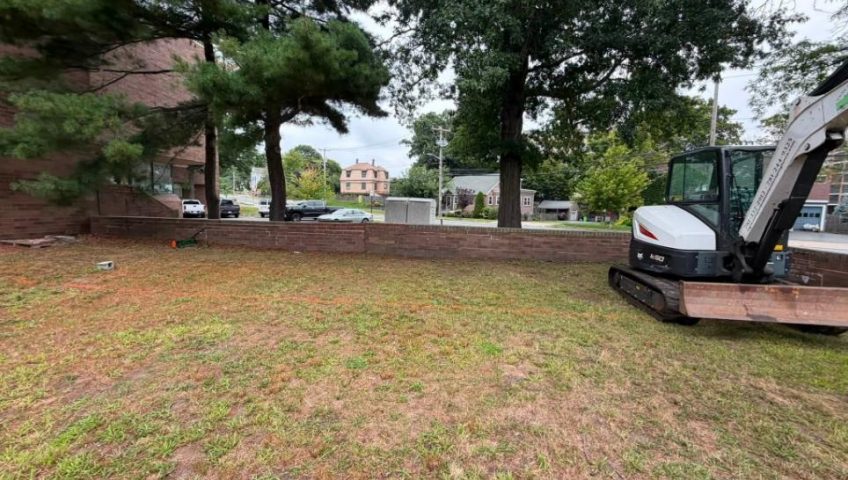
Preparing an established yard for a new outdoor space requires more than simply removing grass and moving soil. Landscape grading around mature trees requires careful planning because the finished grade needs to support drainage and construction while working around established root systems. The project shown here illustrates a common situation: an open lawn being prepared with excavation equipment near mature trees and an existing brick retaining wall. With the right approach, grading can create a more usable surface without unnecessarily disturbing the landscape features that already define the property.
At New Generation Landscaping & Fence, careful site preparation helps homeowners turn challenging yard conditions into practical, well-planned outdoor spaces. Projects involving mature trees, existing retaining walls, and uneven lawn areas benefit from thoughtful grading before additional landscape improvements begin.
Why Landscape Grading Around Mature Trees Requires Planning
Mature trees are valuable landscape features, but their root zones can make site preparation more complicated. Large portions of a tree’s root system can extend beyond the visible canopy, so heavy equipment and significant soil changes need to be carefully managed.
When landscape grading around mature trees is planned, contractors typically need to consider existing elevations, drainage patterns, tree locations, retaining walls, and the intended use of the finished area. The objective is not simply to make the ground look level. It is to establish appropriate elevations while maintaining a practical relationship between the yard, structures, and existing landscape elements.
A professional site assessment can identify areas where grading should be minimized and where soil can be adjusted more effectively.
How Existing Retaining Walls Affect Yard Grading
The brick retaining wall visible in the image is an important part of the existing site. Retaining walls help manage changes in elevation, so new grading should account for the wall’s position and surrounding soil conditions.
Adding or removing soil near an existing wall can change the forces acting against it. For that reason, grading should be coordinated with the wall rather than treated as an isolated lawn project.
A carefully planned Retaining Wall Installation can also be considered when an existing elevation change requires additional support. The specific solution depends on the property’s grades, drainage requirements, wall condition, and the proposed outdoor improvement.
Protecting Mature Trees During Site Preparation
One of the most important considerations during grading is limiting unnecessary disturbance around established trees. Construction equipment should be operated thoughtfully in areas where roots may be present.
The goal is to avoid excessive excavation, soil compaction, or major grade changes within sensitive root zones whenever the project layout allows it. Existing trees should be incorporated into the site plan rather than viewed as obstacles that need to be worked around at the last minute.
For homeowners planning a larger property improvement, professional Landscape Design can help establish where new features should be positioned before excavation begins. This can reduce unnecessary site disruption and create a more coordinated relationship between trees, lawn areas, walls, walkways, and other outdoor features.
Why Proper Drainage Matters After Grading
Changing the elevation of a yard also changes how water moves across the property. Poorly planned grading can leave low areas where water collects or direct runoff toward areas where it is not wanted.
During landscape grading around mature trees, the finished elevations should be planned with surface drainage in mind. The site may need to transition between existing grades while maintaining appropriate drainage around structures and landscape features.
This is especially important when an existing retaining wall or mature vegetation already influences the site’s natural water flow. Addressing drainage during the grading stage is generally more practical than attempting to correct water problems after the new landscape has been installed.
Preparing the Yard for a Future Outdoor Project
The excavator and cleared lawn area shown in the image represent an important construction stage: preparing the existing site for what comes next. Depending on the property owner’s plans, grading may be part of a larger landscape improvement involving planting areas, lawn renovation, hardscaping, or another outdoor living feature.
A properly prepared base gives future work a more predictable starting point. It can also help establish clean transitions between existing features and newly improved areas.
Rather than selecting an outdoor feature first and attempting to force it into an unsuitable yard, homeowners can begin with the property’s existing elevations and physical conditions. This approach is particularly useful for properties containing mature trees, retaining walls, and other established features.
When Professional Site Grading Makes Sense
Small changes to a lawn may be manageable for some homeowners, but larger grading projects involve equipment, soil movement, drainage considerations, and existing landscape features. Professional planning becomes particularly useful when a project involves mature trees or significant elevation changes.
An experienced contractor can evaluate the existing site and determine how much grading is appropriate for the proposed improvement. The work can then be coordinated with other Landscape Installation needs so that grading, drainage, planting areas, and finished surfaces work together.
The image demonstrates why site conditions matter. A seemingly simple lawn can contain mature trees, an existing retaining wall, established grades, and nearby structures—all of which can influence the correct preparation strategy.
For homeowners considering a landscape improvement, New Generation Landscaping & Fence can help evaluate the existing yard and coordinate site preparation with the property’s overall landscape plan. Proper planning can help protect established features while creating a better foundation for future improvements.
FAQ
Can you grade a yard without removing mature trees?
In many situations, existing mature trees can remain while the surrounding yard is prepared. The grading plan needs to account for the trees and avoid unnecessary disturbance to their root zones.
Why is grading important before a landscape project?
Grading establishes the basic elevations and drainage patterns needed for the planned improvement. A properly prepared site can provide a more stable foundation for subsequent landscape work.
Can grading affect an existing retaining wall?
Yes. Changes in soil elevation near a retaining wall can affect the conditions around the structure. Existing walls should therefore be considered when developing the grading plan.
What should be considered when grading around mature trees?
Important considerations include existing elevations, drainage, tree locations, potential root-zone disturbance, equipment access, retaining walls, and the intended use of the finished space.
Is landscape grading suitable for a small residential yard?
Yes. Grading can be useful even in a residential yard when there are uneven areas, drainage concerns, or a planned outdoor improvement. The scope depends on the site’s existing conditions and project goals.
