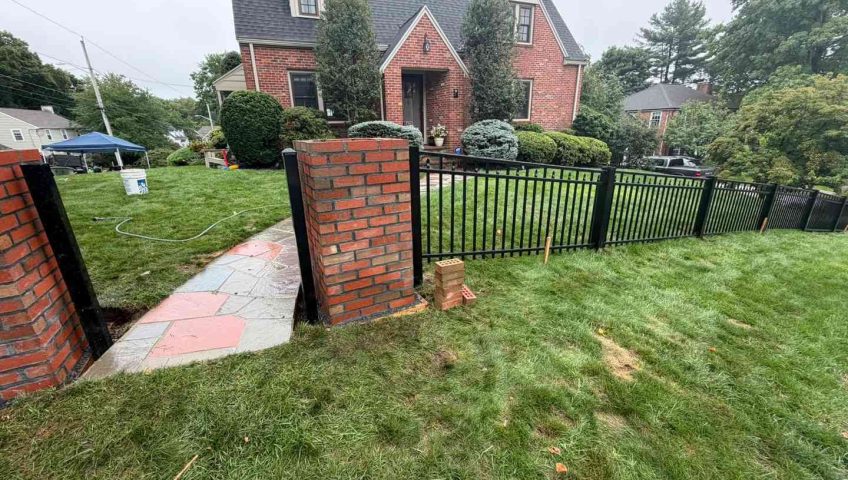
An aluminum fence with brick columns can create a defined front-yard boundary while keeping the property visually open. The combination of metal panels and masonry works especially well when the fence, entry walkway, gate, lawn, and landscaping are planned as one layout. Good planning helps each part of the front yard work together instead of competing for space.
Start With the Property Entrance
The main entrance should be established before the fence line is finalized. Identify the primary walkway and determine where visitors should enter the enclosed yard. A clear relationship between the gate and walkway makes the front approach easier to use and gives the fence a natural focal point.
Measure the space around the entrance carefully so the gate does not interfere with the walkway, lawn, or nearby features. This is particularly important when brick columns are used as visual anchors for the entrance.
Use Brick Columns as Visual Anchors
Brick columns can break up a long fence run and emphasize important points such as an entry gate or change in direction. When aluminum sections are installed between masonry elements, consistent spacing helps create a balanced appearance.
The brick color and the black fence finish can also complement the architecture of a brick home. Rather than treating the columns and fence as separate features, planning them together can produce a more cohesive front-yard design.
Plan Fence Alignment With the Lawn Grade
Front yards often have changes in elevation. The fence layout should account for these changes so sections transition cleanly from one area to another. Corners, posts, and brick columns need to be positioned with the grade in mind.
A well-planned fence line follows the property without creating an awkward visual break at the entrance. Accurate measurements before installation are important when the fence connects to masonry features.
Keep the Walkway Clear
The walkway needs enough open space for regular foot traffic and routine property maintenance. Landscaping should frame the path rather than force people to walk around plants or fence elements.
Keep shrubs, branches, and fast-growing groundcover from blocking the gate opening. A clear entry improves usability and keeps the front yard looking orderly.
Coordinate Landscaping With the Fence
Landscaping can soften the transition between a structural fence and the lawn. Maintained turf, shaped shrubs, and defined planting areas can provide balance without hiding the aluminum panels or the brick columns.
For a coordinated project, New Generation Landscaping & Fence offers services that can be planned around an existing outdoor layout. Homeowners considering aluminum fence services can also coordinate the fence with professional fence installation.
Benefits of a Well-Planned Front Fence Layout
A thoughtful layout can define the front yard, emphasize the home entrance, and keep pathways practical. It can also make landscaping and ongoing lawn care easier because the fence line, gate, and planting areas have clear relationships.
The best design depends on the property’s shape, existing masonry, yard grade, access needs, and the desired appearance. Planning these elements before installation can reduce layout conflicts and create a cleaner finished result.
Frequently Asked Questions
Does an aluminum fence work well with brick columns?
Yes. Aluminum panels can be installed between brick columns to create a structured entry and a visually balanced fence line.
Where should the gate go in a front-yard fence?
The gate is usually best placed where it provides practical access from the main walkway while fitting the overall fence and entry layout.
Can an aluminum fence follow a sloped front yard?
Yes. The fence layout can be planned around changes in grade, with post and panel placement adjusted to follow the terrain cleanly.
How should landscaping be placed near brick columns?
Planting areas can frame the columns while leaving enough open space around the gate, walkway, and fence for access and maintenance.
