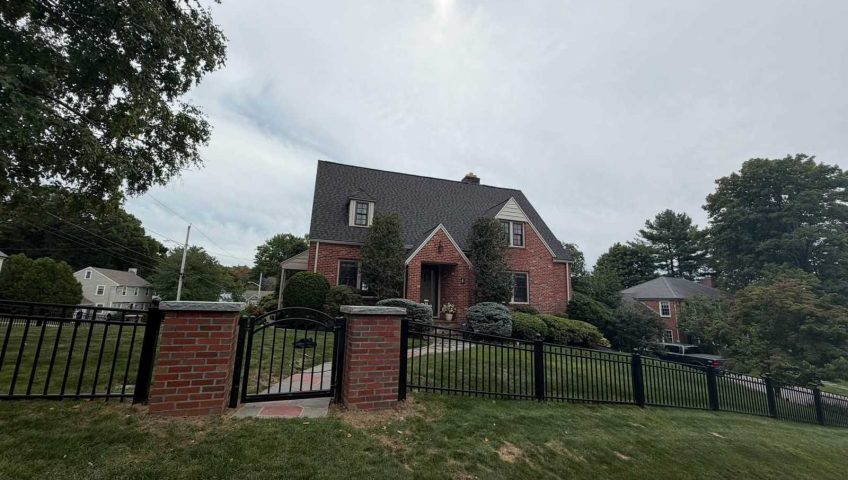
A front gate should be easy to approach, open, and use throughout the season. Landscaping around an aluminum fence can improve the appearance of the entrance, but overgrown grass, shrubs, or groundcover can reduce usable space around a gate. Planning clear access from the walkway to the gate helps keep the front yard both attractive and functional.
Define the Gate Approach First
The space leading to the gate should provide a clear route from the public walkway or driveway to the property entrance. Start by identifying the natural walking path and keep the approach free from plants that could narrow the opening.
A defined route also makes routine lawn care easier because the gate area has a clear boundary between the walkway and landscaped portions of the yard.
Allow Enough Clearance Around the Gate
Gate clearance should be considered before planting around the fence. Grass, shrubs, and other vegetation can spread into the opening over time, so the surrounding layout should leave usable space for gate movement and regular maintenance.
The exact clearance depends on the gate design and the way the entrance is used. Planning the landscape after the gate position is established can help prevent conflicts.
Keep Lawn Growth Away From the Entry
Regular mowing and trimming can keep grass from becoming tall around fence posts and gate openings. A clean lawn edge can also make the entrance look more defined from the street.
Where appropriate, edging can create a clear transition between the walkway, lawn, and fence. This helps keep the gate approach visually organized.
Use Planting Areas Without Blocking the Fence
Planting beds can add interest around an aluminum fence, especially near brick columns or other architectural features. Keep larger shrubs positioned so they do not crowd the gate or hide the fence line.
Choose plant locations based on mature growth rather than only on their initial size. A planting arrangement that looks open when installed can become crowded as plants grow.
Coordinate the Gate With the Walkway
The gate and front walkway should function as one entry system. When the gate is aligned with the approach, visitors can move naturally toward the home without crossing large sections of lawn.
The surrounding landscape can reinforce that direction with a clean lawn edge, simple planting beds, or a defined transition at the entrance.
Plan Fence and Landscaping Together
Fencing and landscaping are easiest to coordinate when access points are considered at the beginning of the project. For homeowners planning a new or updated fence, New Generation Landscaping & Fence can help coordinate the outdoor layout. Related fence gates and enclosures can be paired with landscape design and installation for a more cohesive property plan.
Maintain the Gate Area After Installation
Keeping the gate approach clear should be part of regular outdoor maintenance. Trim grass near posts, remove leaves and clippings, and watch for shrubs or groundcover moving into the opening.
Simple seasonal care can help preserve both the appearance and everyday usability of the entrance.
Frequently Asked Questions
Why is gate clearance important in a landscaped yard?
A clear gate area helps preserve access, prevents landscaping from interfering with movement, and keeps the entrance easier to maintain.
Can landscaping be placed near an aluminum fence gate?
Yes. Landscaping can be used near a gate as long as planting locations leave practical space for gate movement and regular access.
How do I stop grass from covering the gate area?
Regular mowing, trimming, and edging can keep grass under control around the gate and nearby fence posts.
Should large shrubs be planted beside a fence gate?
Large shrubs can be used nearby, but they should be positioned so mature growth does not block the gate opening or walkway.
Can a walkway and aluminum fence be designed together?
Yes. Coordinating the walkway, gate, fence line, and surrounding landscaping can create a more functional and visually organized entry.
