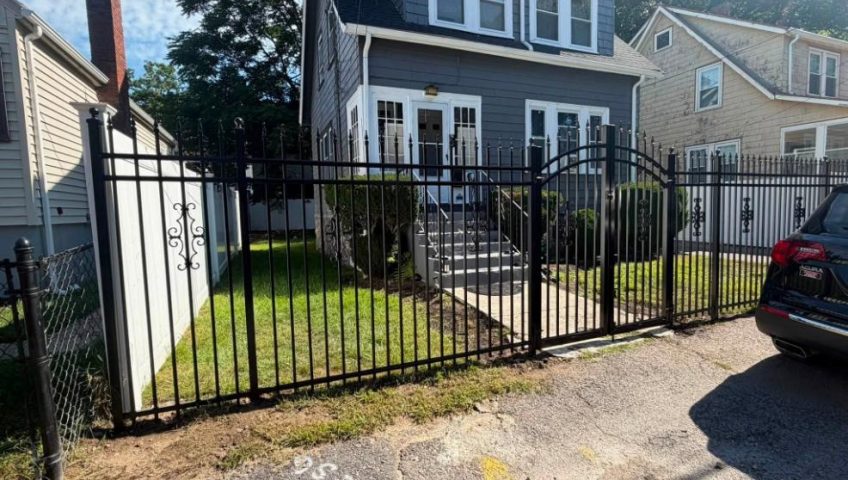
A well-positioned gate can make a residential fence more functional while creating a natural transition between the street and front entrance. The image shows a decorative black metal fence with an arched walk gate positioned beside a paved walkway leading toward the home’s front steps. This type of layout demonstrates why planning a metal fence gate around a front walkway requires attention to pedestrian access, available space, surrounding landscaping, and the relationship between the fence and home. At New Generation Landscaping & Fence, thoughtful planning helps ensure that a fence and gate work naturally with the existing property layout.
Why Metal Fence Gate Placement Matters
The location of a walk gate affects how people enter and move through the front yard. A gate that is too far from the walkway can create an awkward path, while a poorly positioned gate may interfere with landscaping, steps, vehicles, or other property features.
The goal is to establish a direct and practical connection between the sidewalk or driveway and the home’s entrance. The fence should define the property boundary while the gate provides a convenient point of access.
Open decorative metal fencing can be particularly suitable for front-yard applications because it establishes a clear boundary without completely blocking the view of the home and landscape.
How to Position a Metal Fence Gate Around a Front Walkway
When planning a metal fence gate around a front walkway, start by looking at the existing path people use to reach the front door. The gate should ideally provide a logical entrance into that path rather than requiring visitors to walk around landscaping or across unnecessary portions of the lawn.
Several factors should be considered during layout planning:
- The direction of pedestrian movement
- The width and location of the existing walkway
- Distance from the front steps
- Available space for opening the gate
- Nearby driveway access
- Fence-line alignment
- Existing plants and landscape features
The image provides a good example of a gate positioned directly in the fence line while connecting with the walkway that leads toward the home’s entrance.
Allow Enough Clearance for Gate Operation
A gate needs adequate space to open and close comfortably. This becomes especially important in a compact front yard where the fence, walkway, landscaping, and driveway may be close together.
Before Metal Fence Installation, the planned gate swing should be considered carefully. The gate should not unnecessarily obstruct the walkway or create a conflict with nearby features.
Hardware placement, post locations, ground conditions, and the direction of the gate opening can all influence how comfortably the entrance functions.
For properties with limited space, a detailed site assessment can help determine the most practical configuration before installation begins.
Coordinate the Gate With Existing Landscaping
A front-yard fence does not have to stand apart from the landscape. The pictured property combines black ornamental fencing with a small lawn and neatly maintained shrubs around the home’s entrance.
When planning a gate, existing plants should be considered before determining the final post locations. Shrubs and planting beds can frame the entrance, but they should not prevent the gate from opening fully or make the walkway difficult to use.
Landscape Design can also help coordinate fencing with lawn areas, planting beds, walkways, and other outdoor elements. A coordinated layout can make the gate feel like an intentional part of the property’s overall design.
Consider the Relationship Between the Gate and Driveway
Many front-yard properties have both pedestrian and vehicle access. A walk gate and driveway may therefore need to coexist within a relatively small frontage.
The image shows the fence positioned directly beside a paved vehicle-access area. This type of arrangement requires careful attention to the fence line and gate location so pedestrian access remains convenient without interfering with vehicles.
Before installation, homeowners should evaluate where cars are parked, how people approach the front entrance, and whether the fence creates any unnecessary restrictions around the driveway.
Choose a Gate Style That Complements the Fence
A walk gate is one of the most noticeable parts of a front-yard fence. Matching the gate to the surrounding fence creates a more unified appearance.
The gate shown in the image features an arched top and decorative elements that correspond with the ornamental details in the adjacent black metal fence. These design features create a visual focal point without requiring a solid enclosure.
Homeowners can consider the relationship between:
- Gate height and fence height
- Gate shape and architectural style
- Decorative details and fence panels
- Gate color and exterior finishes
- Fence posts and gate hardware
The right combination can make a practical entrance feel more integrated with the home’s exterior.
Plan for Long-Term Function and Maintenance
Gate placement should work not only on installation day but also during everyday use. Regular pedestrian traffic means hinges, latches, and gate posts will experience repeated movement.
Keeping the gate area clear of excessive vegetation and debris can make routine maintenance easier. The surrounding ground should also be monitored so that changes in soil or landscaping do not interfere with the gate’s operation.
Professional Fence Installation can help ensure that posts, panels, gates, and hardware are positioned according to the site’s actual conditions.
At New Generation Landscaping & Fence, coordinating the fence layout with the existing walkway and landscape can help create a practical residential entrance that remains visually consistent with the property.
When Professional Gate Planning Is Worth Considering
A simple fence line may appear straightforward, but front-yard properties often contain multiple elements that need to work together. Walkways, steps, driveways, planting beds, property boundaries, and existing structures can all influence gate placement.
Professional planning is particularly useful when the available space is limited or when homeowners want decorative fencing that closely follows the property’s existing layout.
The goal is to create an entrance that looks intentional, provides convenient pedestrian access, and works properly with the rest of the fence.
FAQ
Where should a metal fence gate be positioned around a front walkway?
The gate should generally connect conveniently with the existing pedestrian path to the home’s entrance. The surrounding walkway, steps, landscaping, driveway, and available opening space should all be considered.
How much space does a metal walk gate need?
The required space depends on the gate dimensions and opening direction. Adequate clearance should be available so the gate can open and close without interfering with the walkway, landscaping, vehicles, or nearby structures.
Can a metal gate be installed beside a driveway?
Yes. A pedestrian gate can be positioned near a driveway when the layout provides sufficient clearance and keeps pedestrian and vehicle access practical.
Should the gate match the metal fence?
Matching the gate with the surrounding fence is a common way to create a cohesive appearance. The image shows an arched decorative gate that complements the adjacent ornamental metal fence.
Can landscaping be added around a metal fence gate?
Yes. Lawn areas, shrubs, and planting beds can complement a metal gate, provided they do not obstruct the gate’s movement or make the walkway difficult to access.
Why is professional gate placement important?
Proper placement helps ensure that the gate connects naturally with the front walkway while providing sufficient clearance and coordinating with the property’s existing landscape and access points.
